Key Takeaways
- Year-one costs for the example’s 80-store, four-SKU launch come to $28,740, which equals 49.9% of the account’s $57,600 in first-year gross sales.
- Launch cost per case works out to $17.96 against $21.00 of gross profit per case, which leaves $3.04 per case in year one.
- In-store demos are the largest cost at $5.63 per paid case, so the article advises negotiating the demo quote first.
- Some retailers value free fill at the distributor’s wholesale price, and at $45.00 the example’s 320 free cases would cost $7,680 against $4,800 on the article’s base case.
- The example launch pays back during month 10, once monthly contribution covers $19,920 of one-time launch costs.
Earlier today, a regional grocery buyer said yes to all four of our example Founder’s snack SKUs. The buyer’s email carried a free fill request, a promo calendar, a demo schedule, and a retail media pitch. Each attachment comes with a price, and together they set the cost to launch a CPG product in retail for that account’s first year.
I’m Maggie Ojeda, Financial Account Manager at Cultivar, and my decade-plus in finance includes four years in winemaking cost control at Grupo Peñaflor. We’ll build one account’s first-year budget together and turn it into a launch cost per case and a payback month.
The brand is launching 4 SKUs into an 80-store regional grocery chain through its distributor. Each 12-unit case sells to the distributor for $36.00 and costs $15.00 to make. That leaves $21.00 of gross profit per case.
What Is the Cost to Launch a CPG Product in Retail?
The cost to launch a CPG product in retail is the sum of one-time launch costs and the ongoing cost to serve a new account over its first 12 months. One-time costs cover free fill or slotting, the launch promotion, in-store demos, and launch retail media. Ongoing costs cover broker commission and freight, plus any later promotions on the retailer’s calendar.
I think of the one-time lines as your cost to get on shelf and the ongoing lines as the cost of staying there.
Slotting is a one-time payment a supplier makes to a retailer for a product’s initial shelf placement. Free fill means giving the retailer free product, such as a case per store, to stock the shelf for a new placement. Ask the buyer which one this launch needs, free fill, slotting, or both.
Temporary price reductions, or TPRs, are short-term cuts to a product’s everyday shelf price. When you fund a promotion through a distributor, the distributor takes the discount out of a later payment to you, which is called an MCB, or manufacturer chargeback. Distributors can add a processing fee on top, which SPS Commerce puts at 8% of the chargeback at KeHE in 2026, so ask yours.
Retail media is advertising a retailer sells to brands on its website and app, in its stores, or on outside sites, targeted with the retailer’s own shopper data.
Brokers sell your product to retail buyers for a commission. Our example uses a CPG broker commission of 5%, an illustrative rate you’d replace with the one in your own agreement.
How Do You Get Real Quotes for Slotting, Demos, and Retail Media?
Get real quotes by sending every retailer and vendor the same short list of questions, then budget only the written numbers that come back. Slotting is set retailer by retailer and item by item, so get the buyer’s number in writing before you accept the terms.
Demo agencies quote in different shapes, so ask each one for an all-in price per demo.
Kroger Precision Marketing, Kroger’s retail media network, gives a clear example of two buying routes for offsite media. Brands can buy through self-service programmatic solutions or through KPM Managed Service campaigns, where an account management team helps create and implement the campaigns. When a retailer offers both routes, I’d price both before you pick one.
The 8-Question Launch Quotes Checklist
Send these eight questions before you accept a buyer’s terms, and every line of your launch budget gets a real number.
- Are we looking at free fill, a fixed slotting fee, or both just to get these SKUs on the shelf?
- If it’s free fill, exactly how many cases per store are we talking, and are you charging that back at our invoice price or the distributor’s wholesale price? (This one changes your margin math entirely!)
- Can I get the exact slotting cost per item for this specific account in writing before we accept the terms?
- What is the true, all-in price per in-store demo from the agency? (We need the final number to plug straight into our launch cost divisor.)
- When we run a TPR, does the distributor tack on an extra processing fee percentage on top of the manufacturer chargeback?
- Does your retail media network offer both self-service and managed service options, and what are the exact rate cards for both so we can model the ROI?
- What is our exact freight cost per case to ship into the distributor's warehouse today?
- Does our broker pull their commission on the gross invoice amount, or is it calculated after promotional deductions come out? (Y'all gotta get this one in writing!)
What Does a First-Year Retail Launch Budget Look Like?
Your first-year retail launch budget lists every one-time and ongoing cost for one new account, beside the gross sales that account should produce. In our illustrative 80-store, 4-SKU launch, year-one costs come to $28,740. Those costs equal 49.9% of the account’s $57,600 in first-year gross sales, which is 1,600 paid cases at $36.00.
Free fill is one case per SKU per store, or 320 cases, charged back at the brand’s $36.00 invoice price. The chargeback price is an assumption, so confirm yours with your distributor. Some retailers value free fill at the distributor’s wholesale price, which sits above your invoice, and at a $45.00 wholesale price the same 320 cases would cost you $7,680. The month 1 opening order is 480 cases, which is 320 of free fill plus 160 paid. Reorders are 120 cases a month, rising to 180 in promo months 2 and 8. Year one ships 1,920 cases, and 1,600 of them are paid.
Each promotion is a TPR funded at $0.75 per unit, or $9.00 per case, on that month’s 180 cases. I’ve used 40 demos at $225 all-in, all held in months 1 to 3, retail media at $1,500 a month in months 2 to 4, and freight at $2.25 per case shipped to the distributor’s warehouse.
One-time launch costs, $19,920 in all:
- Free fill at product cost, 320 cases × $15.00 = $4,800.
- The month 2 TPR, 180 cases × $9.00 = $1,620.
- In-store demos, 40 × $225 = $9,000.
- Launch retail media, 3 months × $1,500 = $4,500.
Ongoing costs to serve the account, $8,820 in all:
- Broker commission, 5% × (1,600 paid cases × $36.00) = $2,880.
- Freight on the 480-case opening order, 480 × $2.25 = $1,080.
- Freight on 1,440 reorder cases, 1,440 × $2.25 = $3,240.
- The month 8 TPR, 180 cases × $9.00 = $1,620.
Free fill counts at product cost for a tidy reason. The distributor’s $11,520 chargeback cancels the $11,520 you invoiced for those 320 cases, which leaves the $15.00 per case it cost you to make them.
The $15.00 cost of goods has to be right for every SKU before this cost to launch a CPG product in retail holds up. Cultivar built Schweiger Vineyards a SKU-level costing model, so CEO Andy Schweiger knows exactly how much each bottle costs.
How Do You Calculate Launch Cost per Case?
Launch cost per case equals a new account’s total first-year costs divided by the paid cases it ships in year one.
| Launch cost per case |
|---|
| = |
|
Total first-year costs
Paid cases shipped in year one
|
Our launch works out to $28,740 ÷ 1,600 paid cases = $17.96 per case. Year-one profit is $21.00 minus $17.96, or $3.04 per case.
The divisor uses paid cases only, because the 1,600 paid cases are the ones that bring in revenue. Splitting a cost per case into its lines still makes me grin, so the table below shows every line in ours.
| What’s inside the $17.96 | Per paid case |
|---|---|
| In-store demos | $5.63 |
| Free fill at product cost | $3.00 |
| Launch retail media | $2.81 |
| Freight | $2.70 |
| Broker commission | $1.80 |
| Month 2 TPR | $1.01 |
| Month 8 TPR | $1.01 |
| Launch cost per case | $17.96 |
Demos move this margin the most, at $5.63 a case, so negotiate the demo quote first. Pedro’s post on velocity over door count asks what a new account will leave you, and setting the $17.96 launch cost per case beside the $21.00 of gross profit per case answers it for this account.
How Long Does a Retail Launch Take to Pay Back?
Our illustrative launch pays back during month 10, once monthly contribution after broker commission and freight has covered $19,920 of one-time launch costs. Ongoing costs come out of every month’s contribution, so payback gets measured against the one-time costs alone. Payback tells you when the one-time share of your cost to launch a CPG product in retail comes back.
| Payback months |
|---|
| = |
|
One-time launch costs
Monthly contribution at regular orders
|
At regular orders, monthly contribution is 120 cases × ($21.00 − $1.80 broker commission − $2.25 freight). That’s 120 × $16.95 = $2,034 a month. Payback is $19,920 ÷ $2,034 = 9.8 months, which lands inside month 10.
The account finishes year one $4,860 ahead, which is $33,600 of gross profit on 1,600 paid cases less $28,740 of costs.
Cultivar’s firm view is that trade spend, cash flow, margin, and profitability have to be planned together, and a launch budget does that on one page. I check each month’s actual deductions against their budget lines, because one surprise chargeback can push the payback month back. Cultivar’s trade spend management logs, categorizes, and verifies every chargeback and deduction, then ties that tracking into your forecasting and planning.
How Do You Bring Your Launch Budget to the Buyer Conversation?
Bring your first-year launch budget to the buyer conversation as four numbers, and share them before you accept the terms. I bring the same four every time:
- Total first-year cost, $28,740 in our example.
- Launch cost per case, which is $17.96 here.
- Year-one profit per case, which is $3.04.
- Payback month, month 10 for this launch.
Budget every SKU count on the table, because each added SKU adds 80 cases of free fill, or $1,200 at product cost.
Once the account’s first year closes, reuse its actual numbers as the starting quotes for your next retailer. Y’all, a second launch budget built on real first-year numbers gets me as stoked as a buyer’s yes. If a buyer just said yes, bring their launch terms to a call with Cultivar, and let’s build your first-year launch budget together.
Frequently Asked Questions
How Much Does Free Fill Cost for a New Grocery Account?
In our example, free fill is one case per SKU per store, and its real cost is what those cases cost you to make. That’s 320 cases at $15.00, or $4,800, because the $11,520 chargeback cancels the $11,520 invoice.
Do Food Brokers Take Commission on Promotional Deductions?
Your broker agreement sets both the commission rate and the invoice base it applies to. Ask your broker to confirm in writing if promotional deductions change that base.
How Much Cash Should a CPG Brand Have Before Launching in a Grocery Chain?
Model your full launch costs, then hold at least two or three months of buffer cash on top of them. In our example, $18,420 of one-time costs lands in months 1 to 3, and the cumulative result bottoms out $11,343 behind after month 3. The low counts each sale in the month it ships, so add your distributor’s payment terms and your production timing before you size the cash.
Is It Cheaper to Launch in Independent Grocery Stores or a Regional Chain?
Compare the two with the same budget template, because each retailer sets its own free fill, slotting, promotion, and demo terms. Ask the eight questions on the launch quotes checklist for each retailer, then compare launch cost per case and payback month for both options.
Related Resources
- Cultivar’s CPG accounting services deliver monthly financial statements built for CPG, so your actuals sit beside this launch budget.
- My earlier post on that dream retail account covers the cash and crew a new account needs, including at least two or three months of buffer cash above modeled launch costs.
- UNDONE’s U.S. launch shows how Cultivar built a U.S. back office for a launch, with a clean, scalable chart of accounts and a three-statement financial model.
About the Author

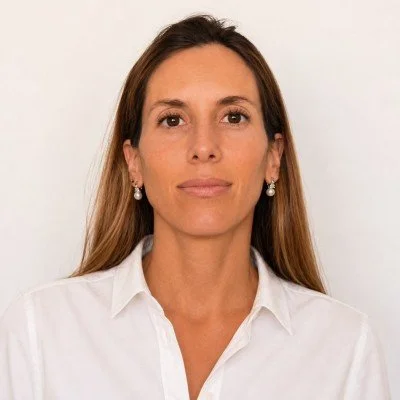
Maggie Ojeda
Financial Account Manager, Cultivar · Executive MBA, IAE Business School · FP&A for Napa Valley wineries and US CPG brands
Magdalena (Maggie) Ojeda is a Financial Account Manager at Cultivar. She joined Cultivar in 2024 as a Senior FP&A Consultant and went on to lead its US financial planning and analysis (FP&A) team as FP&A Manager. She brings more than 10 years of finance experience, including roles at Accenture, P&G, and Grupo Peñaflor, one of Argentina's top wine producers, where she spent four years in winemaking cost control. Maggie specializes in FP&A for Napa Valley boutique wineries and US CPG brands. She earned her economics degree at Universidad Nacional de Cuyo and her Executive MBA at IAE Business School, and she has mentored Founders in the SKU accelerator.